Data Quality
What data quality means for AI systems, the dimensions of data quality, and how validation, profiling, and monitoring prevent garbage-in-garbage-out failures.
Data quality refers to the degree to which data is accurate, complete, consistent, timely, and fit for its intended use. For AI systems, data quality is not a nice-to-have - it directly determines model performance. A model trained on dirty data produces dirty predictions.
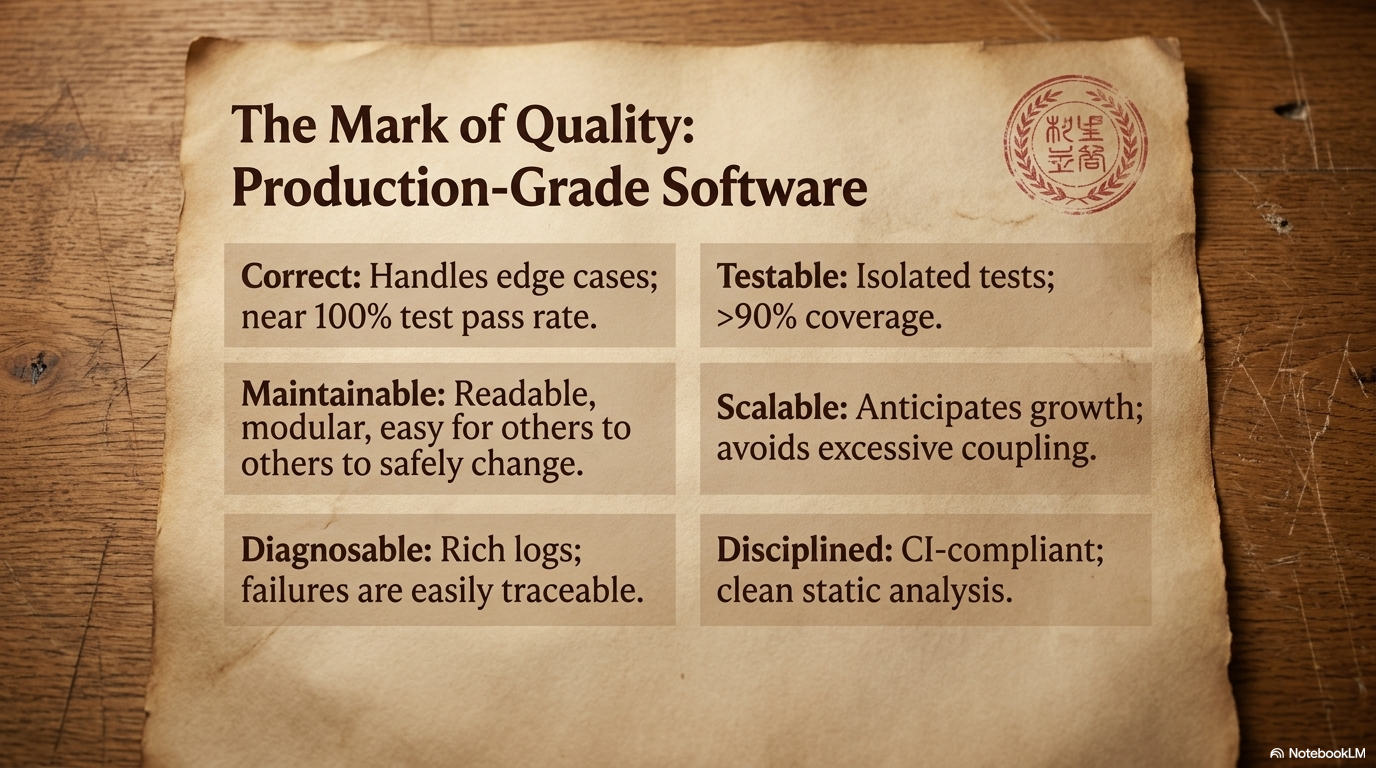
The phrase “garbage in, garbage out” understates the problem. With AI, garbage in often produces confident-sounding garbage out, which is worse than an obvious failure.
Dimensions of Data Quality
Accuracy - Does the data correctly represent the real-world entity or event? A customer address that is misspelled, a transaction amount that is off by a factor of 100, or a label that is wrong all represent accuracy failures.
Completeness - Are all required fields populated? Missing values in critical features force models to impute or drop rows, both of which introduce bias or reduce training data volume.
Consistency - Does the same entity have the same representation across systems? If one system records dates as UTC and another as local time, joining them produces incorrect results.
Timeliness - Is the data current enough for its intended use? A fraud detection model using transaction data with a one-hour delay has a one-hour blind spot.
Uniqueness - Are duplicate records eliminated? Duplicate training examples bias a model toward overrepresented cases.
Validity - Does the data conform to defined formats and business rules? An age field containing negative numbers or an email field containing phone numbers are validity failures.
Key Practices
Data Profiling - Automated analysis of data distributions, null rates, cardinality, and value ranges. Profiling reveals issues before they reach model training. Tools: Great Expectations, Deequ, pandas-profiling.
Validation Rules - Executable checks that run on every data load. Examples: “no null values in customer_id,” “price is between 0 and 10000,” “event_timestamp is within the last 48 hours.” Validation gates in pipelines prevent bad data from propagating.
Data Monitoring - Continuous tracking of data quality metrics over time. Alerts fire when distributions shift, null rates spike, or volume drops unexpectedly. This catches data drift that degrades model performance.
Schema Enforcement - Rejecting data that does not match the expected schema. Schema-on-read approaches defer this validation and frequently result in late discovery of breaking changes.
Data quality is not a one-time cleanup project. It is a continuous process that requires tooling, ownership, and cultural commitment.
Sources
- Redman, T.C. (1998). The impact of poor data quality on the typical enterprise. Communications of the ACM, 41(2), 79-82. (Early quantification of data quality costs.)
- Wang, R.Y., & Strong, D.M. (1996). Beyond accuracy: What data quality means to data consumers. Journal of Management Information Systems, 12(4), 5-33. (Foundational four-dimension framework: accuracy, completeness, consistency, timeliness.)
- Polyzotis, N., et al. (2019). Data lifecycle challenges in production machine learning. ACM SIGMOD Record, 47(2), 17-28. (Google TFX team on data quality in ML production pipelines.)
- Breck, E., et al. (2019). Data validation for machine learning. MLSys 2019. (TensorFlow Data Validation; automated validation in continuous training.)