Infrastructure as Code (IaC)
What Infrastructure as Code is, and how Terraform, AWS CDK, and CloudFormation compare for managing AI project infrastructure.
Infrastructure as Code (IaC) is the practice of managing and provisioning cloud infrastructure through machine-readable configuration files rather than manual console operations. With IaC, your infrastructure has the same version history, code review process, and deployment automation as your application code.
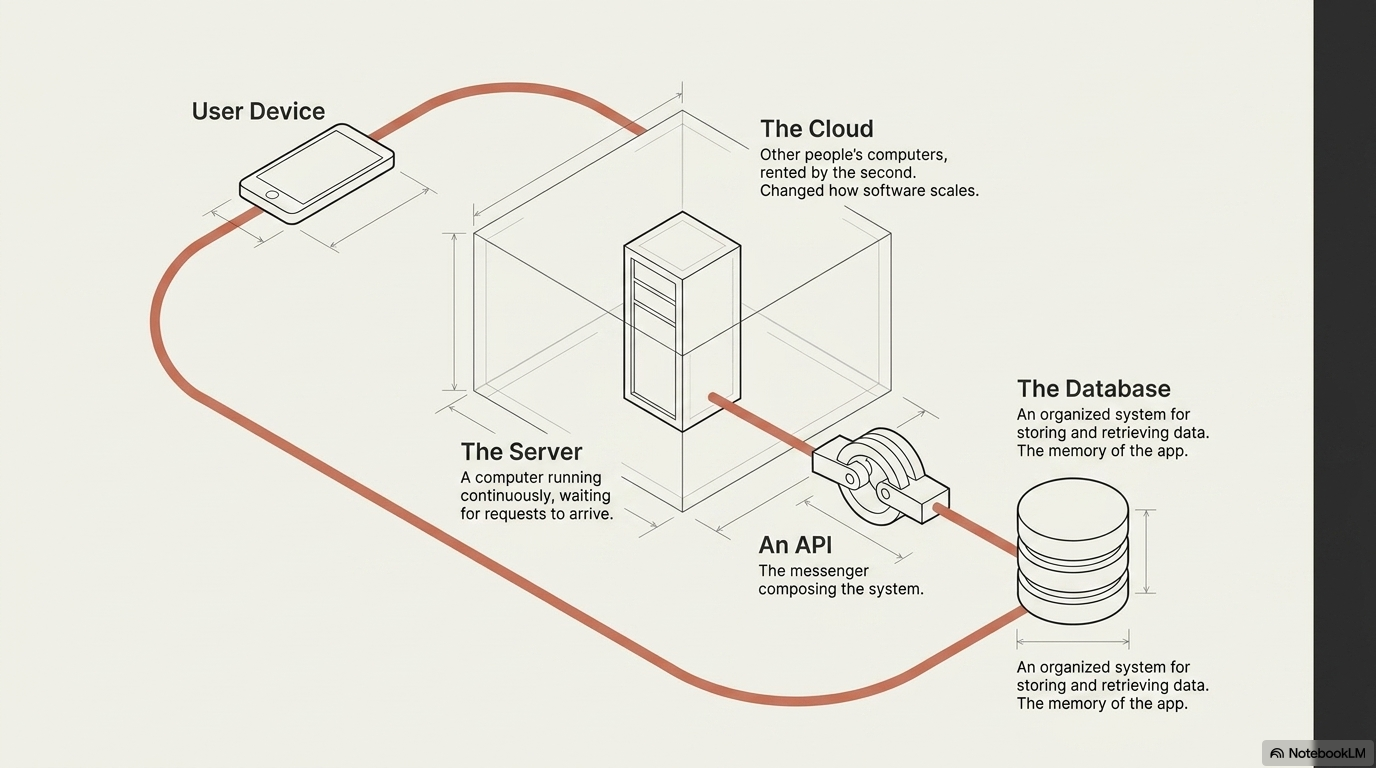
Why IaC for AI Projects
AI projects typically involve many interconnected AWS services: S3 buckets, Lambda functions, Step Functions state machines, IAM roles, Bedrock configurations, EventBridge rules, and more. Manually creating these through the AWS console is:
- Not repeatable - no reliable way to recreate the exact environment for a new region, team member, or after an incident
- Not auditable - no record of who changed what and when
- Prone to drift - the console configuration diverges from what the team thinks is deployed
IaC makes infrastructure reproducible, reviewable, and deployable in CI/CD pipelines alongside application code.
Terraform
Terraform (by HashiCorp, an IBM company since IBM completed its acquisition on 27 February 2025) is the most widely used IaC tool. Since HashiCorp’s August 2023 licence change (effective from version 1.6) it has been released under the Business Source License rather than an open-source license; OpenTofu, a fork of the last open-source release, is a CNCF Sandbox project (accepted 23 April 2025) and a largely drop-in alternative. It uses HCL (HashiCorp Configuration Language), a declarative format describing desired state. Terraform supports every major cloud provider and thousands of third-party services through its provider ecosystem.
Advantages: multi-cloud (same workflow for AWS, Azure, GCP), large community, mature module ecosystem on the Terraform Registry.
Limitations: HCL is a custom language (not a general-purpose programming language), dynamic configuration requires workarounds, the AWS provider sometimes lags behind new service launches.
AWS CDK
AWS Cloud Development Kit (CDK) lets you define infrastructure using TypeScript, Python, Java, C#, or Go. CDK synthesizes to CloudFormation templates, so it is ultimately CloudFormation under the hood.
Advantages: use real programming languages (loops, conditionals, classes), strong TypeScript typing catches errors at compile time, L2/L3 constructs provide sensible defaults for common patterns.
Limitations: AWS-only, CloudFormation service limits apply, deployment can be slower than Terraform for large stacks.
CloudFormation
AWS CloudFormation is AWS’s native IaC service. Templates are YAML or JSON. CDK compiles to CloudFormation, so they share the same execution model.
Advantages: no additional tooling required, deep AWS service support (new services often ship CloudFormation support on day one), native drift detection.
Limitations: YAML/JSON is verbose, limited abstraction capability, error messages are notoriously unhelpful.
Comparison Summary
| Dimension | Terraform | CDK | CloudFormation |
|---|---|---|---|
| Language | HCL | Python/TS/etc. | YAML/JSON |
| Multi-cloud | Yes | No | No |
| Abstraction | Modules | L2/L3 constructs | Nested stacks |
| State management | S3 + DynamoDB | Managed by CF | Managed by CF |
| Learning curve | Medium | Medium (Python familiar) | Medium (YAML verbose) |
See the Terraform vs CDK comparison for a detailed decision framework.
IaC for AI Projects in Practice
For AI projects, IaC typically manages:
- Storage (S3 buckets with lifecycle policies, versioning, encryption)
- Compute (Lambda functions, ECS tasks, Step Functions)
- AI services (Bedrock model access, Knowledge Base configurations)
- Auth (Cognito User Pools, IAM roles and policies)
- Networking (VPC, security groups for private AI endpoints)
The IAM layer is where IaC provides the most value for AI projects - precisely defining what each Lambda function and Step Functions state can access prevents privilege escalation and limits blast radius.
Related Articles
- Terraform - detailed guide
- Terraform vs CDK - choosing between tools
- Serverless Computing - primary infrastructure pattern for AI workloads
Sources
- Morris, K. (2016). Infrastructure as Code: Managing Servers in the Cloud. O’Reilly Media. (First book to comprehensively define IaC practices; established the principles of dynamic infrastructure management.)
- IBM Newsroom. (27 February 2025). IBM Completes Acquisition of HashiCorp. https://newsroom.ibm.com/2025-02-27-IBM-Completes-Acquisition-of-HashiCorp,-Creates-Comprehensive,-End-to-End-Hybrid-Cloud-Platform
- CNCF. OpenTofu project page (accepted to CNCF at Sandbox level on 23 April 2025). https://www.cncf.io/projects/opentofu/
- Hashimoto, M. (2014). Terraform: A tool for building, changing, and versioning infrastructure safely and efficiently. HashiCorp. (Terraform introduction; the most widely adopted IaC tool for multi-cloud infrastructure.)
- Humble, J., & Farley, D. (2010). Continuous Delivery. Addison-Wesley. Chapter 11: Managing Infrastructure and Environments. (Established treating infrastructure as code as a prerequisite for continuous delivery.)