A Short History of Computing: From the Abacus to the Microchip
Plain-English history of computing, from counting beads to mechanical calculators, programmable machines, and the silicon chip. For product managers, finance professionals, and anyone building with technology.
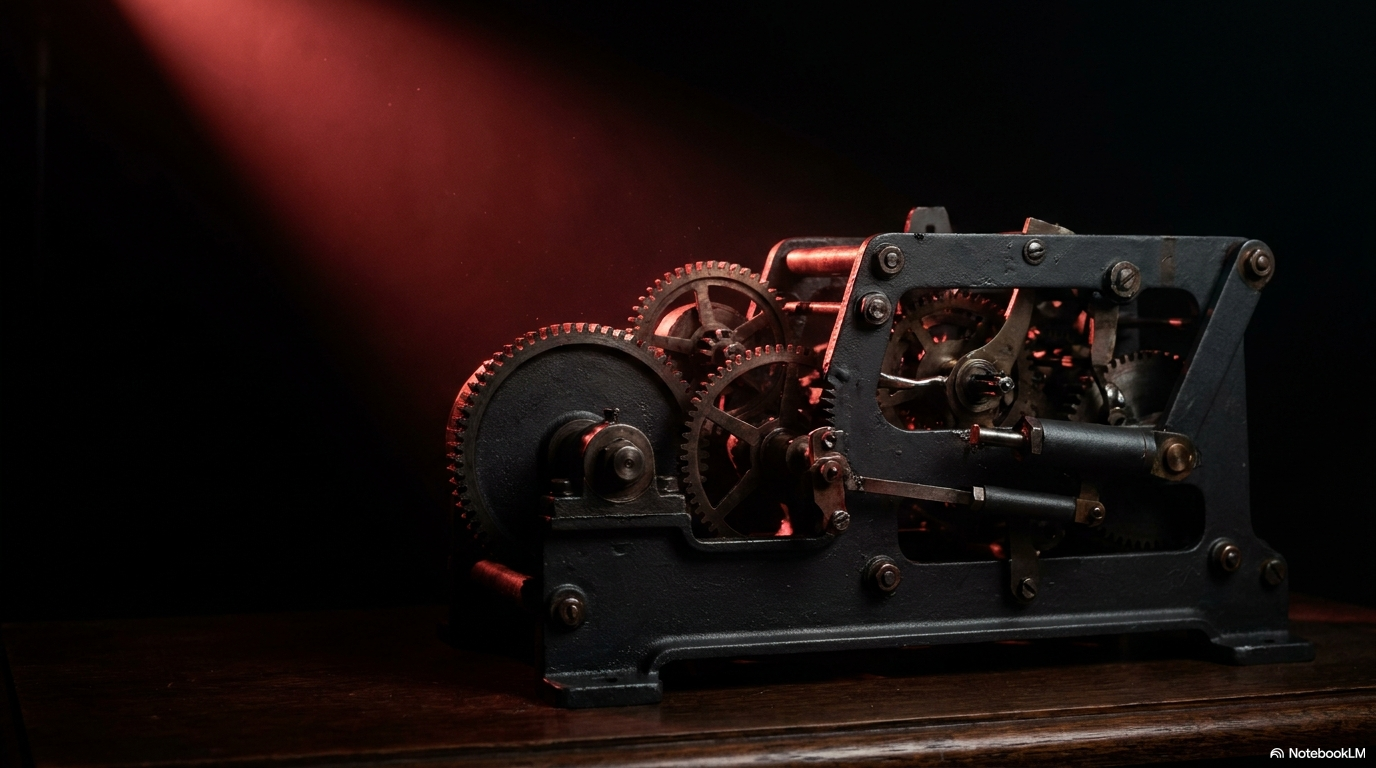
Most people think computing started with the personal computer, or maybe the internet. It is much older. The ideas behind your laptop were worked out over more than 4,000 years, by people who never saw a screen. This guide walks through that history in plain English, so the rest of the technology you use makes more sense.
If you want to explore the full story interactively, including the software, cloud, and AI eras that come after this article, open the interactive IT history timeline or read the in-depth pillar, The History of IT .
The five leaps
Leap 1: counting tools
The abacus appeared in the ancient world more than 4,000 years ago. It is a frame of beads in columns, where each column stands for a place value: ones, tens, hundreds. By sliding beads, a trained user can add, subtract, multiply, and divide faster than most people can on paper.
The lesson is simple but deep. A physical object can represent a number, and moving the object can stand in for a calculation. That is the seed of every computer: numbers represented by something physical, changed by a set of rules.
Leap 2: mechanical calculators
In 1642, the French mathematician Blaise Pascal built the Pascaline to help with his father’s tax work. It used geared wheels: turn a wheel ten notches and it pushes the next wheel one notch, carrying the way you carry a digit by hand. It could add and subtract on its own.
Thirty years later, Gottfried Leibniz improved on it with the Step Reckoner, which could also multiply and divide. The analogy here is a car’s odometer. The wheels carry over automatically when one rolls past nine. These machines proved arithmetic itself could be done by a machine, with no human doing the sums.
Leap 3: stored instructions (the birth of the program)
This is the leap that turned a calculator into a computer. The key idea is that a machine can follow a changeable set of instructions, not just one built-in task.
It started, oddly, with weaving. In 1804 Joseph-Marie Jacquard built a loom controlled by punched cards . Holes in the cards decided which threads lifted for each row, so changing the cards changed the pattern. The pattern was, in effect, a program stored on cards.
Charles Babbage saw the potential. From 1837 he designed the Analytical Engine , a general-purpose mechanical computer with a processing unit (the “mill”), a memory (the “store”), and punched-card input. It was never finished in his lifetime, but the design was a true programmable computer a century early.
His collaborator Ada Lovelace went further. In 1843 she wrote what is widely called the first algorithm intended for a machine, and she grasped that such a machine could manipulate any kind of symbol, not only numbers. That is the idea behind every app you use. To go deeper on this, see what is an algorithm .
Punched cards then found a practical job. In 1890 Herman Hollerith used a punched-card tabulator to count the US Census in months instead of years. His company later became IBM. Data processing as a business was born here, decades before electronics.
The logic underneath: how machines came to “think”
Hardware is only half the story. Three ideas gave computing its mathematical foundation.
- Boolean algebra (1854). George Boole showed logic could be done with algebra, using just two values, true and false. Every digital circuit is built on this.
- The Turing machine (1936). Alan Turing defined, in a famous paper , exactly what it means for something to be “computable”, and described a universal machine that could run any program. This is the theoretical blueprint of the general-purpose computer.
- Information theory (1948). Claude Shannon showed that switching circuits could carry out Boolean logic, and defined information mathematically, giving us the “bit”. This connected the abstract logic to real electrical circuits.
If you want the deeper “how numbers are stored” angle, read number systems .
Leap 4: electronic switches
A gear is slow. The next leap replaced moving parts with electricity. The first electronic computers used vacuum tubes, glass bulbs that switch current on and off. ENIAC , finished in 1945, used about 17,000 of them and filled a room.
The same year, John von Neumann described the stored-program design : keep the program and the data together in the same memory. This “von Neumann architecture” is still how nearly every computer works today, from your phone to a data center.
Vacuum tubes were hot, big, and burned out. The fix arrived in 1947, when Bell Labs invented the transistor , a tiny solid switch with no moving parts and no fragile glass. The transistor is the single most important building block in all of electronics.
Leap 5: the chip
A transistor on its own still has to be wired to others by hand. In 1958 and 1959, Jack Kilby and Robert Noyce independently created the integrated circuit : many components made together on one piece of silicon. No hand-wiring, and you can make millions of them cheaply.
In 1965 Gordon Moore noticed that the number of components on a chip kept doubling at a steady pace . That observation, Moore’s law, became the heartbeat of the industry. In 1971 Intel put a whole processor on one chip, the Intel 4004 , and the microprocessor made the personal computer possible.
From then to now
| Era | The machine | The big idea it gave us |
|---|---|---|
| Ancient | Abacus | Numbers can be represented physically |
| 1600s | Pascaline, Step Reckoner | Arithmetic can be automated |
| 1800s | Jacquard loom, Analytical Engine | A machine can follow a stored program |
| 1930s-40s | Turing machine, ENIAC | Logic plus electronics equals a computer |
| 1947 | Transistor | A small, reliable electronic switch |
| 1958-71 | Integrated circuit, microprocessor | A whole computer on one chip |
Everything after this point, operating systems, the internet, the cloud, and AI, is software and services built on top of the chip. That next part of the story is covered in The History of IT .
What’s next
You now have the hardware foundation. To continue:
- What is a computer? : how the parts of a modern machine fit together.
- The History of IT : the full story from here through software, cloud, and AI.
- Interactive IT history timeline : explore every milestone, see what became legacy, and open the original source behind each date.
Further reading
- Computer History Museum: Timeline of Computer History : the definitive, well-sourced public history of computing.
- Turing, On Computable Numbers (1936) : the original paper that defined computability.
- Moore, Cramming more components onto integrated circuits (1965) : the article that became Moore’s law.
- The Babbage Engine (Computer History Museum) : the story of the Analytical Engine and Ada Lovelace.
- What is a programming language? : how we tell these machines what to do.
Frequently asked questions