The Fashionista
You already understand version control, deployment pipelines, and technical debt. You know them as seasonal collections, fitting rooms, and cluttered wardrobes.
You already know what it means to run parallel collections without letting them bleed into each other. You know the exact moment a piece is ready to ship. You know that a cluttered archive costs more to maintain than it took to build. Every software system you will ever work with operates on exactly the same principles. The vocabulary is different. The discipline is the same.
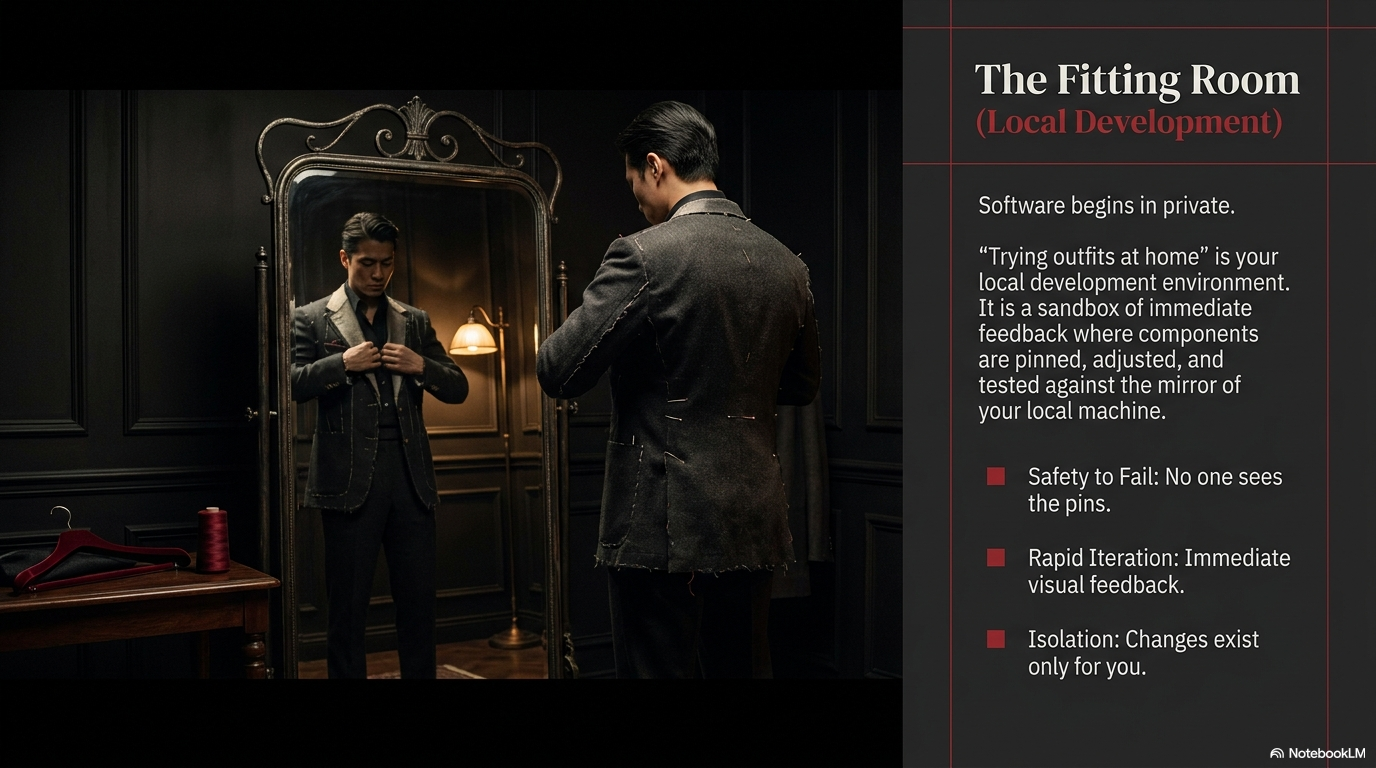
Your local machine is the private studio before the show
Everything you do in a fitting room is safe to experiment with. You try on combinations, adjust, discard what does not work. No one outside sees any of it. In software, your local development environment is exactly the same space: write code, break things, test combinations. When you push to the shared repository, you step out of the fitting room. What you take out must be ready to be seen.
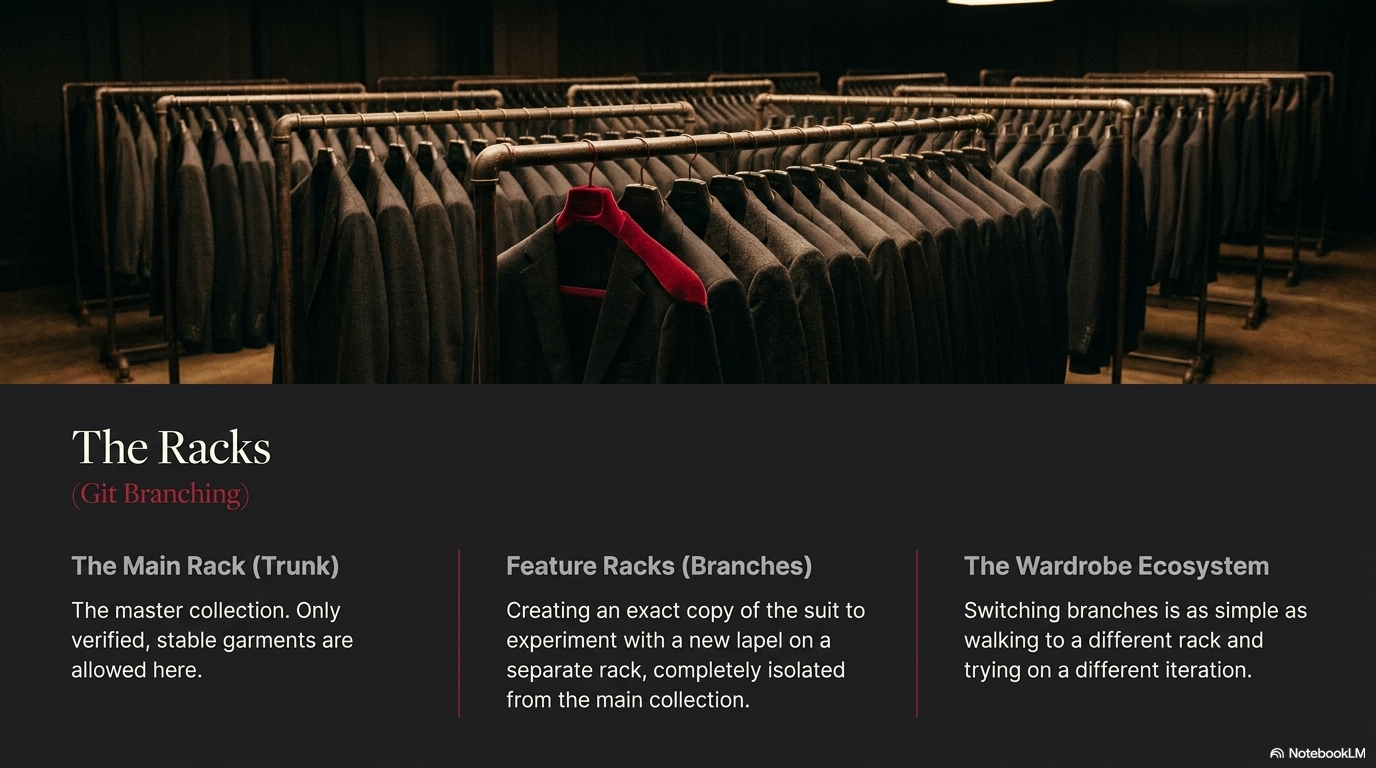
Parallel collections that never bleed into each other
A well-run atelier maintains multiple rails simultaneously: current season, next season, alterations, archival pieces. Each rail is independent. Work on one does not touch another. Nothing from the next collection reaches the floor until it is reviewed and approved. Git branches operate identically. Each branch is a rail: a contained track for a single feature or fix. It runs in parallel with the main codebase. When it is finished and reviewed, it merges. The rules are the same.
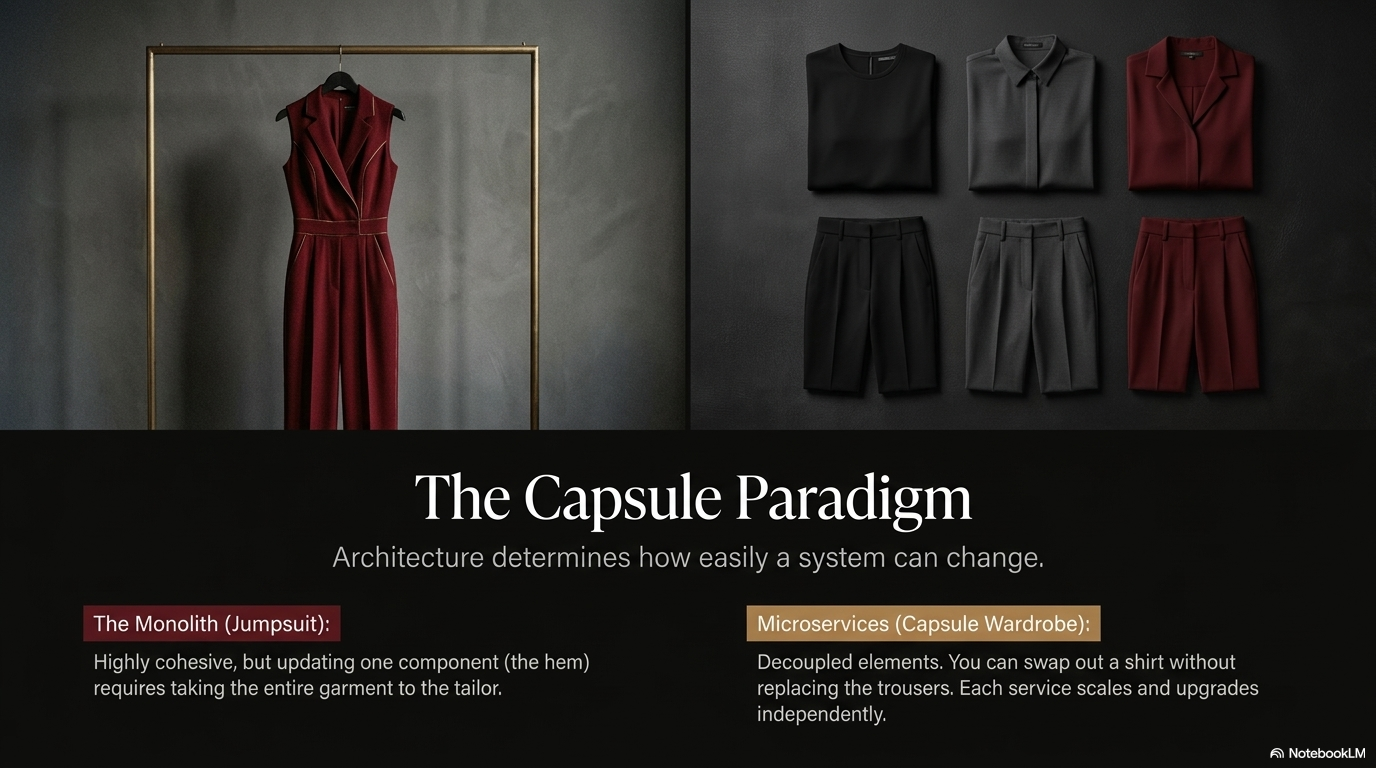
Small composable pieces that work independently or together
A capsule collection is built from a small number of versatile pieces that combine freely. Each item connects to every other without redesigning the system. Remove one piece and the rest still function. Add a new one and it integrates without disrupting what exists. Microservices architecture uses the same logic: services are small, independently deployable units, each with one responsibility. They communicate over defined interfaces. One can fail without taking down the others. The collection holds.
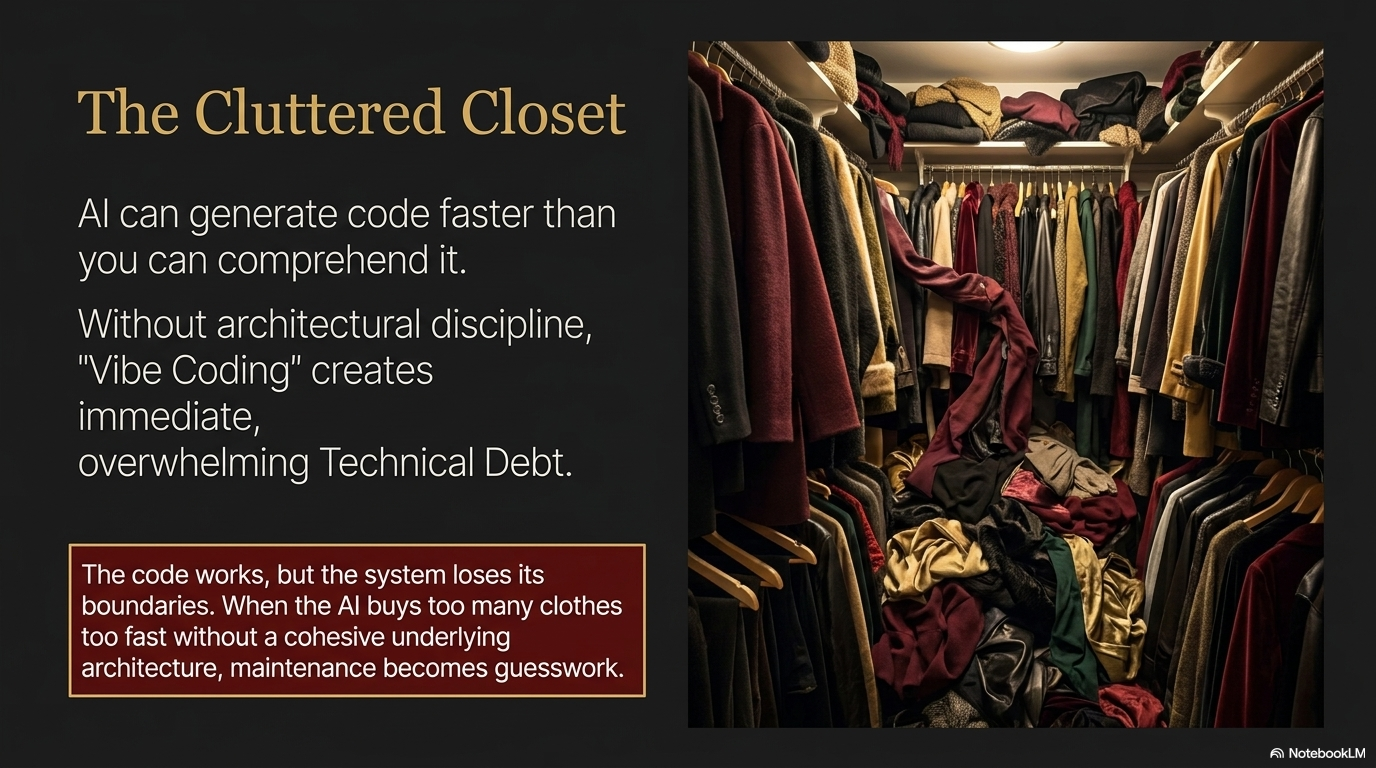
Fast additions without curation accumulate a debt you will pay later
A wardrobe built over years without curation becomes impossible to navigate. Duplicates. Things that no longer fit. Pieces added in a hurry that clash with everything else. Finding what you need takes longer than it should. Adding new items makes the problem worse. Technical debt is the same accumulation in code: shortcuts taken under pressure that made sense at the time, piling up until every new feature costs more than the last. Clearing it is not failure. It is the regular edit.
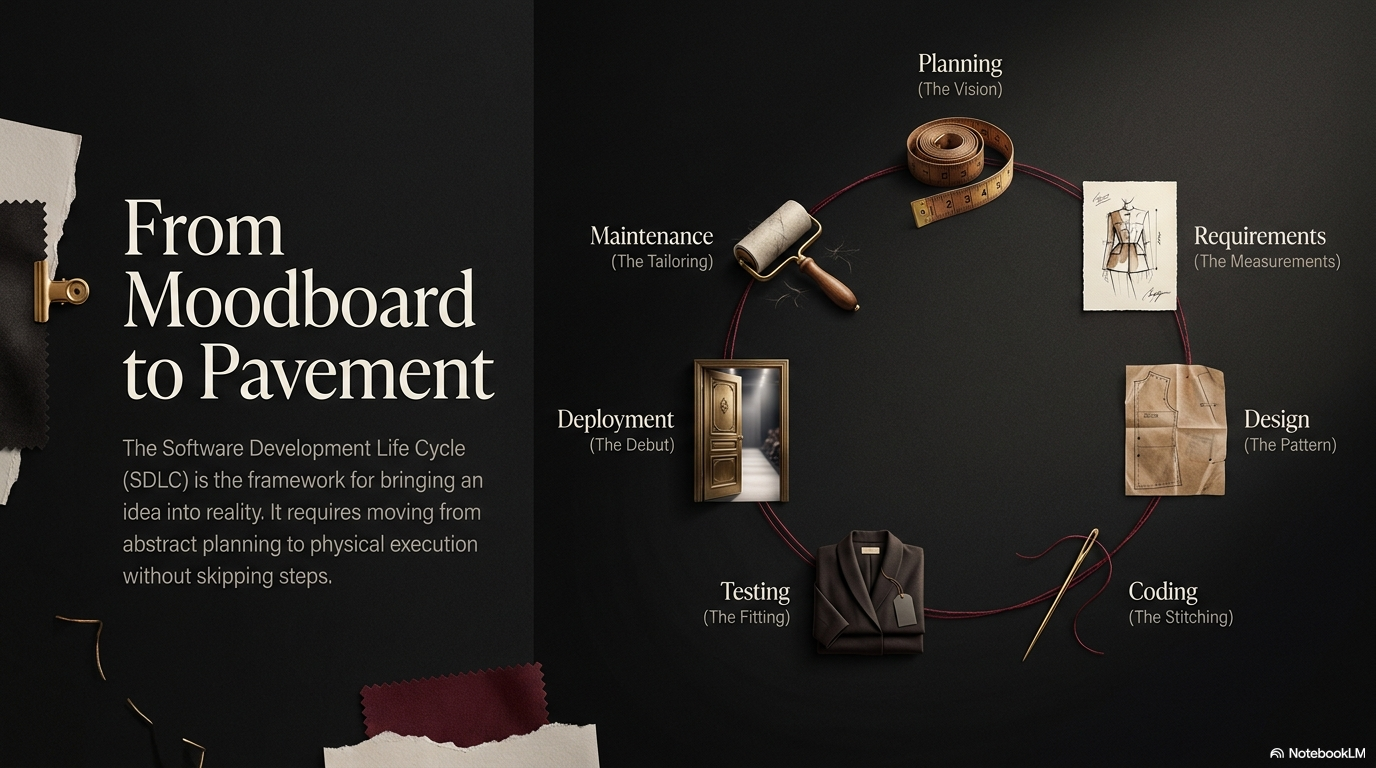
No collection ships without passing through every stage
A collection moves through defined stages: research, sketches, samples, fittings, production run, quality control, runway. You cannot skip fittings and go straight to production. The garment will not fit. Software development follows the same logic: plan, gather requirements, design, build, test, deploy, maintain. Each stage exists because it catches problems that would cost far more to fix in the next stage. The runway is not the shortcut. The stages are the shortcut.
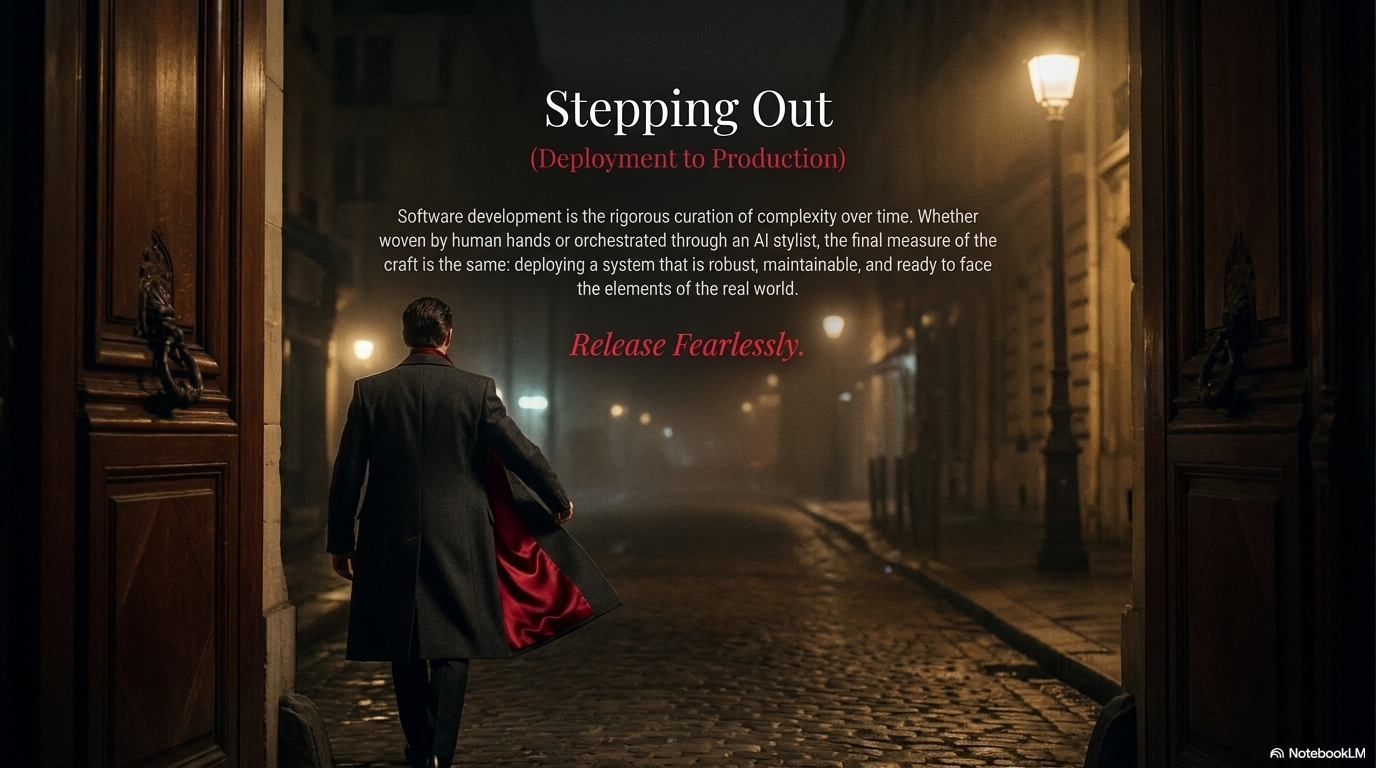
The fitting room was private. The street is for everyone
The fitting room was private iteration. Stepping out the door is irreversible. The outfit is now in real conditions: crowds, weather, angles you did not anticipate at the mirror. Deployment is the same moment. Code moves from a server only you can reach to a server your users hit. Automated pipelines run checks before every release because what fails in production was not visible in the fitting room. You plan for it. You do not discover it at the kerb.
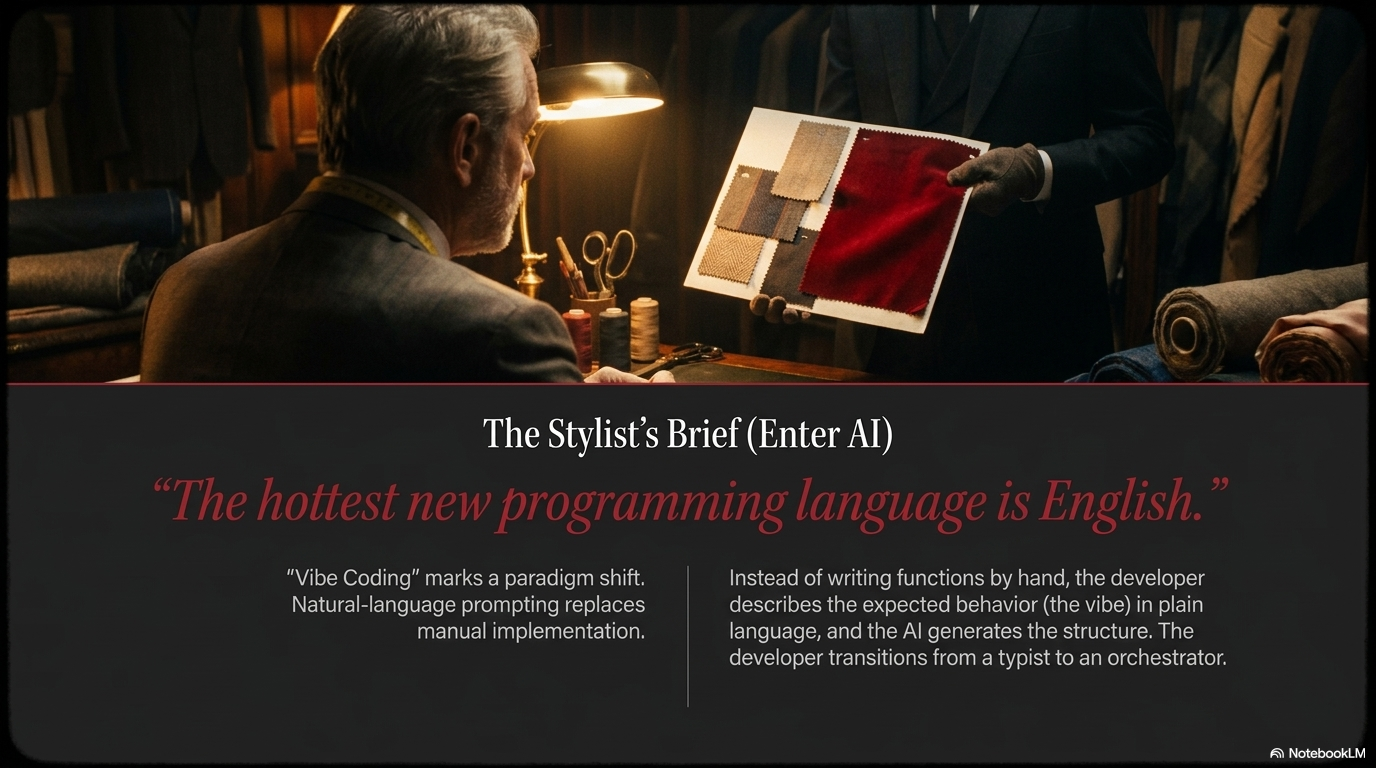
Precision of direction determines quality of output
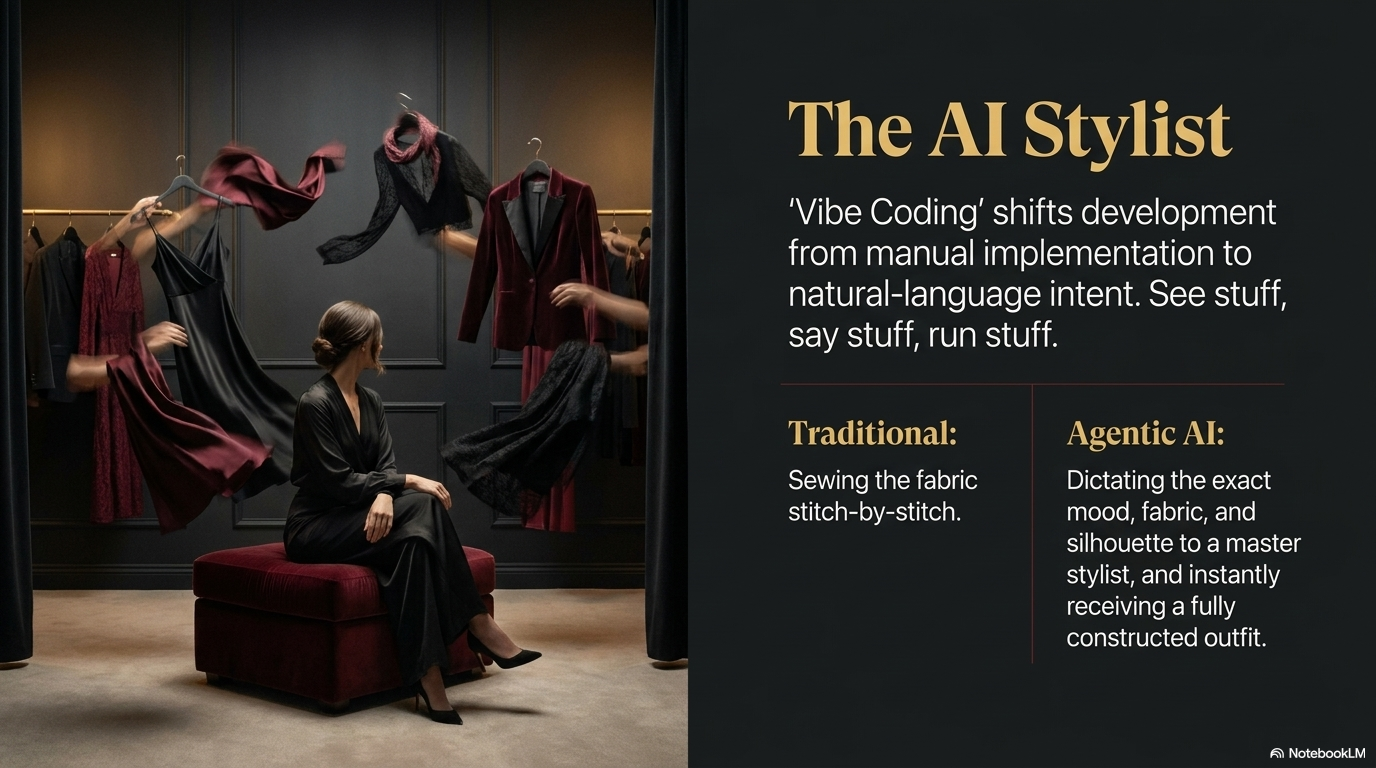
A stylist brief for a shoot is not "make it look nice." It is specific: location, mood reference, three hero pieces, no prints, structured silhouettes, neutral base. The more precise the direction, the less the team guesses. Prompting AI works identically. Vague input produces vague output. A well-formed prompt includes context, constraints, expected format, and the exact outcome you need. The AI is the atelier. You are the creative director. The brief still has to be yours.
Go deeper in this lens
Three research threads
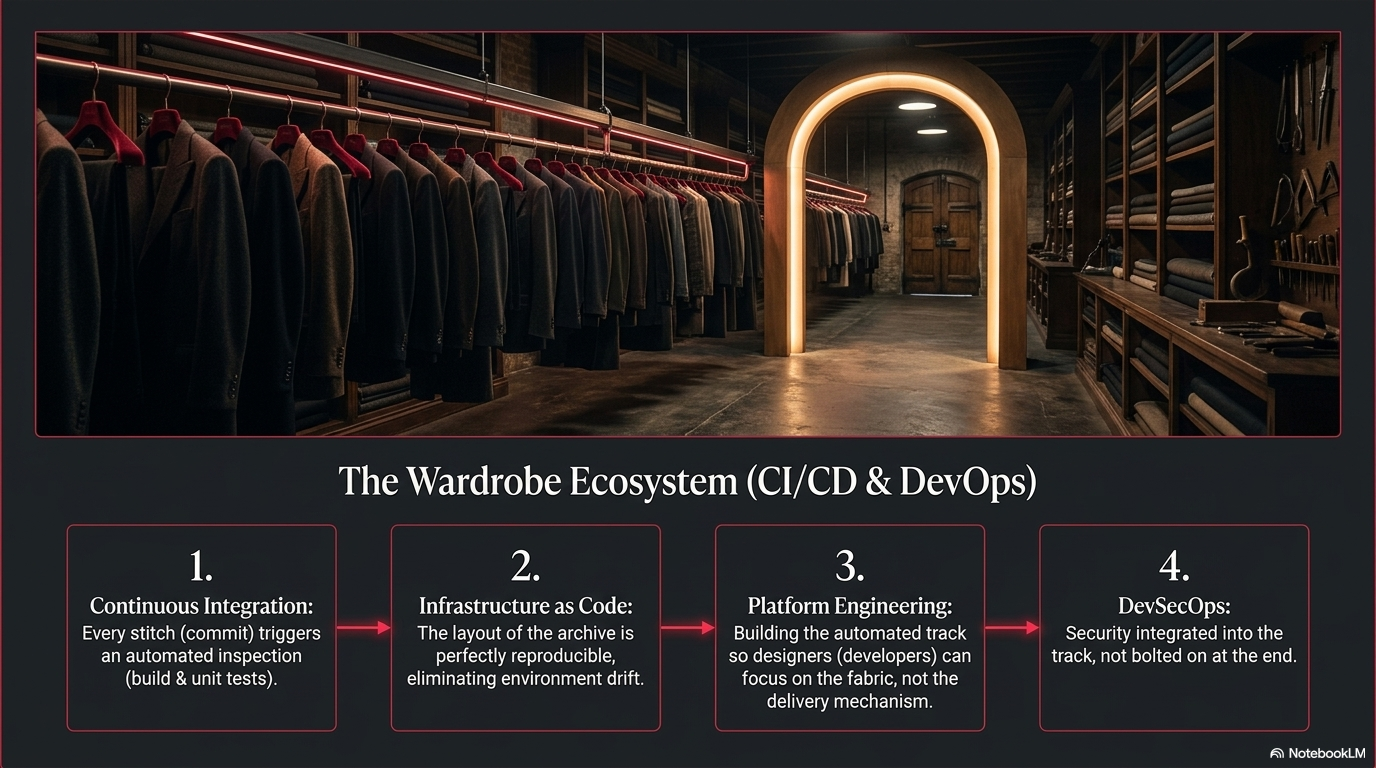
Map to the wiki
Every metaphor has a technical name
Use these to cross from the wardrobe lens into the full wiki reference. Each page has diagrams, examples, and implementation patterns.