Hollerith punched-card tabulator
An 1889 electromechanical machine that recorded data as holes in cards, then counted and sorted them, founding the data-processing industry that became IBM.
The Hollerith punched-card tabulator is an electromechanical system that recorded data as holes punched in stiff cards, then counted and sorted those cards using electrical sensing. Herman Hollerith patented it in 1889 (US Patent 395,782) and used it to process the 1890 United States Census. It cut census tabulation from years to months and launched the data-processing industry that became IBM.
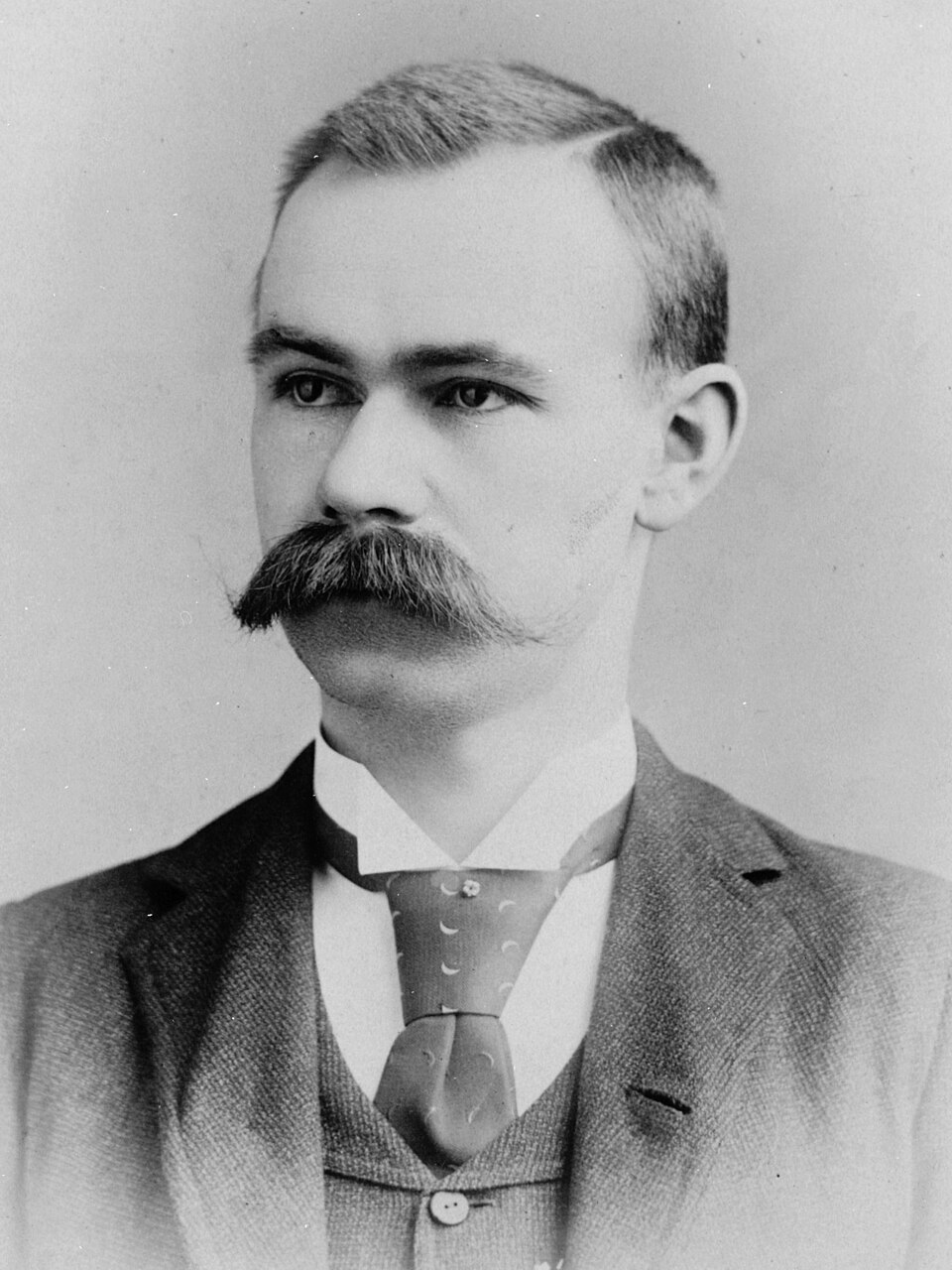
What it was
A census asks millions of people the same questions, then needs totals. Counting answers by hand is slow and error-prone. Hollerith encoded each person’s answers as holes in a card. One position meant one fact, such as a state, an age band, or an occupation.
The tabulator read the card with a press of spring-loaded pins. Where a hole existed, a pin dropped through and dipped into a tiny cup of mercury. That closed an electrical circuit. The current advanced a dial counter for that category by one. Cards with no hole at a position left the circuit open, so nothing counted.
A separate sorting box helped group cards. When the reader sensed a chosen hole, a lid on the matching bin sprang open, and the operator dropped the card in. Operators then ran each group again to get finer totals.
Think of it like a hotel switchboard. Each guest request connects one socket to one line and lights one lamp. Hollerith’s card connected one fact to one counter. The pattern of holes decided which counters clicked forward.
Why it mattered
The 1880 census took roughly eight years to tabulate by hand. The population was rising fast, so the 1890 count threatened to overrun into the next decade. The Census Office held a competition, and Hollerith’s machine won easily.
The 1890 census produced a usable population count within months rather than years. The full detailed tabulation still took time, but the speed-up over manual methods was enormous. The machines also made cross-tabulation practical, so officials could count people by age and occupation together, not one question at a time.
The deeper shift was commercial. Hollerith founded the Tabulating Machine Company in 1896 and rented machines to railways, insurers, and governments. Data processing became a business. His firm merged into a larger company in 1911 that renamed itself IBM in 1924.
The punched card itself became a standard. Businesses encoded payroll, inventory, and accounts onto cards for decades. A whole industry of punches, sorters, and tabulators grew around the medium that Hollerith made practical.
How it connects to AI today
The tabulator established a pattern that still defines computing: separate the data from the machine that processes it. Hollerith borrowed the punched card from the Jacquard loom and from ideas in Babbage’s Analytical Engine , but he applied it to records rather than weaving or pure calculation. That move created data processing as a discipline.
The card lineage runs straight into modern computing. IBM punched cards fed mainframes and early electronic computers for most of the twentieth century. The UNIVAC and its rivals read cards for input. Programmers carried decks of cards to load both programs and data. The famous 80-column IBM card defined screen and file widths long after the cards themselves vanished.
The real inheritance is the structured record. A Hollerith card is one row of fixed fields, each holding one value. That is exactly the shape of a database row, a CSV line, or a spreadsheet record. Every machine-learning pipeline starts here. You encode each example as a fixed set of features, then feed many examples to a model that counts patterns across them.
A builder meets this idea constantly. When you turn raw text into a feature vector, one-hot encode a category, or load a training table, you repeat Hollerith’s move. A one-hot vector is a row of slots where one position is “punched” to one and the rest are zero. The tabulator counted holes across millions of cards; a model sums signals across millions of examples. The medium changed from cardboard to tensors. The principle, encode facts as positions and process them in bulk, is unchanged.
Still in use today
The Hollerith tabulator is legacy-accepted. The physical machines are retired, preserved in museums and archives as the origin of automated data processing. No one runs a mercury-cup card reader in production. The era of punched cards in computing ended in the 1980s as terminals, disks, and tape took over.
The card as an object lingered in odd corners. Punched and mark-sense cards appeared in voting systems and standardized tests well into the 2000s. The 2000 US election dispute over “hanging chads” involved punched ballot cards, a late and troubled echo of the technology.
The deeper idea did not retire; it became invisible infrastructure. Tabulation, sorting, and the structured record are foundational to databases, spreadsheets, and data pipelines. The 80-column convention still shapes some file formats and terminal habits. So the medium is obsolete, but the method Hollerith proved, encode data discretely and process it mechanically at scale, sits underneath every system that handles records today.
Further reading
- IT History Timeline : where the Hollerith tabulator sits in the wider story of computing.
- AI Learning Galaxy : explore how structured data connects to modern machine learning.
- Jacquard loom : the punched-card control mechanism that inspired the data card.
- The Analytical Engine : Babbage’s card-driven machine in the same lineage.
- Herman Hollerith (Wikipedia) : biography and the development of the tabulating system.
- US Census Bureau: The Hollerith Machine : primary historical account of the 1890 census machine.
- IBM: Hollerith and the punched card : IBM’s record of the technology that founded the company.
Frequently asked questions